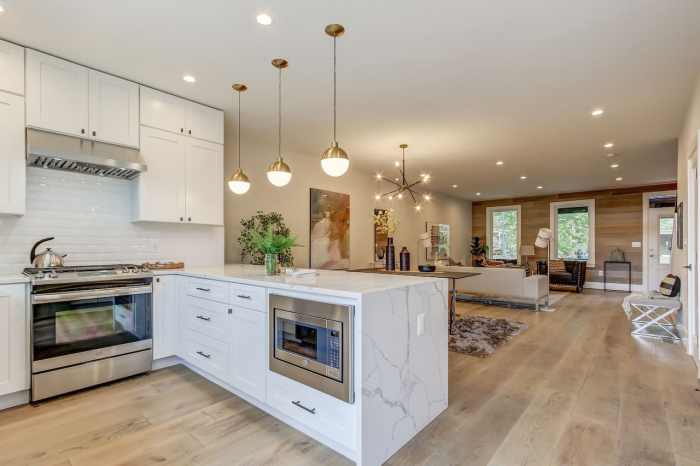
Transforming your kitchen into an open concept design is a significant undertaking, blending culinary spaces seamlessly with adjacent areas. This renovation offers a unique opportunity to enhance both functionality and aesthetic appeal, creating a heart of the home that’s both inviting and efficient. From careful planning and budget considerations to selecting the right materials and appliances, this guide navigates the complexities of open concept kitchen renovations, offering practical advice and inspiring design ideas to help you achieve your dream kitchen.
We’ll explore various design styles, layout options, and the crucial steps involved in a successful renovation. Understanding the benefits and drawbacks, potential challenges, and strategies for minimizing disruption are key to a smooth process. Whether you’re envisioning a modern, traditional, or farmhouse aesthetic, we’ll provide the insights you need to make informed decisions and bring your vision to life.
Design Aspects of Open Concept Kitchen Renovations
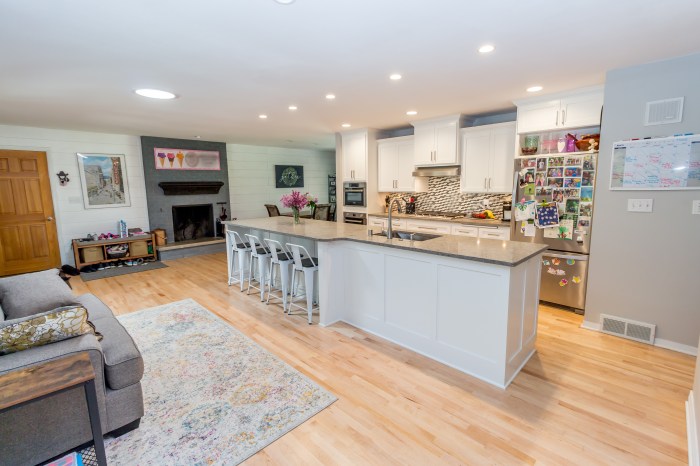
Creating a successful open concept kitchen involves careful consideration of various design aspects to ensure both functionality and aesthetic appeal. The seamless integration of the kitchen with adjacent living spaces requires a holistic approach, encompassing lighting, flooring, and key design elements that promote a smooth visual flow.
Lighting in Open Concept Kitchens
Appropriate lighting is crucial in open concept kitchens. It significantly impacts the overall ambiance and functionality of the space. Layered lighting is recommended, combining ambient, task, and accent lighting to create a versatile and inviting atmosphere. Ambient lighting, such as recessed lights or a central pendant fixture, provides general illumination. Task lighting, including under-cabinet lights or pendants over islands, illuminates work areas.
Accent lighting, such as track lighting or strategically placed spotlights, highlights architectural features or artwork, adding depth and visual interest. Consider using dimmer switches to adjust the intensity of lighting to suit different moods and activities. For example, a dimmer switch on overhead lighting allows for a softer glow during dinner parties, while bright task lighting is essential during food preparation.
Flooring Options for Open Concept Kitchens
Choosing the right flooring is essential for both aesthetics and practicality in an open concept kitchen. Several options offer durability and style. Hardwood floors, for instance, offer a classic and elegant look, but require regular maintenance and can be susceptible to scratches and water damage. Tile flooring, particularly porcelain or ceramic, is highly durable, water-resistant, and easy to clean, making it an excellent choice for high-traffic areas.
However, tile can be cold underfoot. Luxury vinyl plank (LVP) offers a cost-effective alternative that mimics the look of hardwood or stone, while being waterproof and durable. The choice ultimately depends on personal preference, budget, and lifestyle.
Design Elements Enhancing Flow and Visual Appeal
Several design elements contribute to the seamless flow and visual appeal of an open concept kitchen. Maintaining a consistent color palette throughout the kitchen and adjacent living spaces creates a cohesive look. Using similar materials, such as countertops or backsplashes, further enhances this unity. Open shelving can visually connect the kitchen with the adjoining area, while carefully chosen furniture pieces can help define different zones within the open space.
A well-designed island can serve as both a functional workspace and a visual divider, separating the kitchen from the living area while maintaining an open feel. Furthermore, strategic placement of windows and mirrors can maximize natural light and create a sense of spaciousness.
Incorporating Different Design Styles
Open concept kitchens can successfully incorporate various design styles. Below is a comparison of three popular styles:
| Style | Color Palette | Materials | Key Features |
|---|---|---|---|
| Modern | Neutral tones, with pops of bold color | Sleek stainless steel, glass, concrete, minimalist cabinetry | Clean lines, minimalist design, integrated appliances |
| Traditional | Warm, earthy tones, often featuring rich woods | Natural wood, stone, ornate cabinetry, brass hardware | Detailed cabinetry, ornate moldings, decorative backsplashes |
| Farmhouse | Neutral base with pops of color, often featuring blues and greens | Distressed wood, natural stone, open shelving, farmhouse sink | Rustic charm, open shelving, exposed beams, vintage accents |
Materials and Appliances for Open Concept Kitchens
Selecting the right materials and appliances is crucial for creating a functional and aesthetically pleasing open concept kitchen. The choices you make will significantly impact the overall look, feel, and longevity of your renovation. Consider durability, style, and energy efficiency when making your decisions. These elements work together to create a cohesive and enjoyable space.
Durable and Aesthetically Pleasing Countertop Materials
The countertop is a focal point in any kitchen, especially in an open concept design where it’s highly visible. Choosing a durable and attractive material is essential. Several options offer both aesthetics and longevity.
- Quartz: Engineered stone, quartz offers a wide variety of colors and patterns, mimicking the look of natural stone without the high maintenance. It’s incredibly durable, resistant to scratches and stains, and relatively easy to clean.
- Granite: A natural stone, granite is known for its unique veining and durability. However, it requires sealing to protect against stains and is more prone to chipping than quartz.
- Marble: Another natural stone option, marble is prized for its elegance and luxurious appearance. However, it’s porous and requires regular sealing. It’s also more susceptible to etching from acidic substances.
- Butcher Block: A classic choice, butcher block countertops offer a warm, rustic feel. They’re durable and can be sanded and refinished over time. However, they require regular oiling and are susceptible to scratches and water damage if not properly maintained.
- Laminate: A budget-friendly option, laminate countertops offer a wide variety of styles and colors. While not as durable as natural stone or engineered materials, they are easy to clean and maintain.
Energy-Efficient Appliances Enhancing Kitchen Functionality
Incorporating energy-efficient appliances not only reduces your environmental impact but also lowers your utility bills. Several advancements in appliance technology offer both energy savings and improved functionality.
- Energy Star Certified Refrigerators: Look for refrigerators with the Energy Star label, indicating they meet strict energy-efficiency guidelines. Features like advanced insulation and efficient compressors contribute to significant energy savings.
- Induction Cooktops: Induction cooktops heat cookware directly, resulting in faster cooking times and less energy waste compared to gas or electric ranges. They also offer precise temperature control and are easier to clean.
- Energy Star Certified Dishwashers: Energy Star certified dishwashers use less water and energy than standard models. Look for features like soil sensors and advanced wash cycles to optimize water and energy usage.
- Smart Ovens with Convection Features: Smart ovens often include convection cooking, which circulates hot air for even cooking and faster cooking times, leading to energy savings.
Cabinetry Selection: Impact on Storage and Aesthetics
Cabinetry plays a vital role in both the functionality and aesthetics of your open concept kitchen. Careful consideration of style, material, and storage solutions is key.
Choosing the right cabinetry involves considering factors such as the available space, desired style, and budget. Different materials, such as wood, thermofoil, or laminate, offer varying levels of durability and aesthetic appeal. Consider incorporating features like pull-out drawers, corner cabinets, and pantry units to maximize storage space.
Sample Kitchen Layout
This example showcases a contemporary open-concept kitchen incorporating the previously discussed materials and appliances.
- Countertops: Quartz countertops in a light gray shade for durability and a clean aesthetic.
- Cabinets: Shaker-style cabinets in a warm white finish, offering ample storage with a combination of upper and lower cabinets, including pull-out drawers and a corner pantry.
- Appliances: Energy Star certified stainless steel appliances including an induction cooktop, a smart convection oven, and a French-door refrigerator with an ice maker.
- Island: A large kitchen island with a quartz countertop, providing additional prep space and seating.
- Backsplash: A white subway tile backsplash complements the cabinets and countertops, creating a clean and modern look.
- Flooring: Wide-plank light oak hardwood flooring provides warmth and durability.
Kitchen Renovation Considerations (General)
Undertaking a kitchen renovation is a significant undertaking, demanding careful planning and execution. Success hinges on several key factors, from selecting the right contractor to managing the inevitable challenges and minimizing disruption to your daily routine. This section addresses crucial considerations for a smooth and successful renovation.
Choosing a Qualified Contractor
Selecting a qualified contractor is paramount. Thorough research is crucial. Begin by gathering recommendations from friends, family, and neighbors who have recently completed similar projects. Check online review platforms such as Yelp, Angie’s List, or HomeAdvisor for feedback and ratings. Shortlist potential contractors and conduct in-depth interviews.
Verify their licensing, insurance, and bonding. Request detailed proposals outlining the scope of work, materials, timelines, and payment schedules. Compare proposals carefully, paying attention to the level of detail, the clarity of communication, and the overall professionalism of the contractor. A reputable contractor will provide references and be willing to answer your questions thoroughly and patiently. Don’t hesitate to visit completed projects to assess the quality of their workmanship firsthand.
Common Challenges During Kitchen Renovations
Kitchen renovations often present unforeseen challenges. Unexpected structural issues, such as discovering outdated plumbing or electrical systems, can significantly impact the budget and timeline. Material delays, due to supply chain disruptions or manufacturer backlogs, are also common occurrences. Changes in design or scope during the project can lead to cost overruns and schedule adjustments. Effective communication between the homeowner and contractor is essential to mitigate these challenges.
Regular site visits and transparent communication about any changes or unforeseen problems can help keep the project on track. Contingency planning, incorporating a buffer for unexpected expenses and delays, is highly recommended.
Managing the Renovation Timeline Effectively
Effective timeline management is crucial for a successful kitchen renovation. Develop a detailed project schedule with the contractor, outlining key milestones and deadlines. Regularly monitor progress against the schedule, identifying and addressing any potential delays promptly. Communicate clearly with the contractor about your expectations regarding timelines and be prepared for potential adjustments based on unforeseen circumstances. Using project management tools, such as Gantt charts or online collaboration platforms, can aid in tracking progress and managing tasks effectively.
Maintaining open communication with the contractor throughout the project is essential for timely completion. For example, a realistic timeline might allocate 4-6 weeks for a moderately sized kitchen renovation, but this can vary significantly based on the scope of work and the complexity of the project.
Minimizing Disruption to Daily Life
Minimizing disruption during a kitchen renovation requires careful planning and preparation. Consider temporarily relocating to another area of the house, or even temporarily staying elsewhere, depending on the scale of the renovation. If staying in the house, designate a temporary kitchen area with essential appliances and cooking supplies. Maintain clear communication with the contractor regarding noise levels and working hours to minimize inconvenience.
Regular cleaning and tidying of the work area can help maintain a manageable level of disruption. For example, using plastic sheeting to protect unaffected areas from dust and debris is a simple yet effective measure. Storing non-essential items elsewhere during the renovation will free up space and minimize clutter.
Visual Representation of Open Concept Kitchens
Visualizing an open concept kitchen involves considering the interplay of space, design elements, and color palettes to create a cohesive and functional area. This section will explore various design approaches, showcasing the impact of color and highlighting the importance of well-integrated island designs.
Three Open Concept Kitchen Designs
Three distinct open concept kitchen designs illustrate the versatility of this popular layout. The first features a minimalist aesthetic in a space measuring approximately 15′ x 12′. Clean lines are emphasized, with white shaker-style cabinetry paired with sleek stainless steel appliances and a quartz countertop. The flooring is wide-plank light oak, contributing to the airy feel. The second design, in a slightly larger space (18′ x 15′), embraces a more rustic charm.
Reclaimed wood beams adorn the ceiling, contrasting with dark-stained cabinetry and a butcher block island. The backsplash is a warm-toned, textured stone, complementing the earthy palette. Finally, a third design, occupying 20′ x 18′, showcases a contemporary style. Glossy, dark gray cabinetry is juxtaposed against a white marble backsplash and waterfall island in the same material.
Polished concrete flooring completes the sophisticated look.
Impact of Color Palettes on Open Concept Kitchens
Color plays a crucial role in setting the mood and feel of an open concept kitchen. A cool palette, utilizing shades of blue, gray, and white, creates a serene and calming atmosphere. Imagine a kitchen with soft blue cabinetry, white quartz countertops, and gray-toned flooring. This combination fosters a sense of spaciousness and tranquility. In contrast, a warm palette, incorporating shades of beige, brown, and cream, evokes a cozy and inviting ambiance.
Visualize a kitchen with creamy white cabinetry, warm beige walls, and light brown wood flooring. This palette promotes a sense of warmth and comfort. Finally, a bold palette, employing vibrant colors like deep greens, sunny yellows, or rich reds, adds energy and personality. A kitchen featuring deep green cabinetry, a bright yellow backsplash, and white countertops creates a striking and memorable space.
The choice of color palette significantly impacts the overall perception of the kitchen’s size and atmosphere.
Open Concept Kitchen Island Design
A central island is a defining feature of many open concept kitchens. Consider an island measuring 4′ x 8′, constructed from a rich walnut butcher block. This provides ample prep space and seating for three to four people. The island incorporates a built-in sink, a dishwasher, and several drawers for storage. Pendant lighting hangs above the island, providing focused task lighting while enhancing the visual appeal.
The combination of the dark wood, sleek appliances, and bright lighting creates a focal point that seamlessly integrates with the surrounding kitchen and living area. The island’s size and functionality are tailored to the specific needs and dimensions of the kitchen, showcasing the versatility of this key design element.
Ultimately, an open concept kitchen renovation is more than just a remodeling project; it’s about creating a space that reflects your lifestyle and enhances your daily living. By carefully considering design elements, materials, and the overall flow, you can achieve a beautiful and functional kitchen that serves as the heart of your home for years to come. Remember that thorough planning, a realistic budget, and the selection of a qualified contractor are essential for a successful outcome.
Embrace the journey, and enjoy the rewarding experience of creating your dream open concept kitchen.
FAQ Insights
What is the average cost of an open concept kitchen renovation?
Costs vary greatly depending on location, size, materials, and complexity. Expect a wide range, from several thousand to tens of thousands of dollars.
How long does an open concept kitchen renovation typically take?
The timeline depends on project size and complexity, but can range from several weeks to several months.
What permits are required for an open concept kitchen renovation?
Building permits are usually required for any structural changes or plumbing and electrical work. Check with your local authorities for specific requirements.
Can I do some of the work myself to save money?
While some tasks may be DIY-friendly (e.g., painting), complex work like plumbing and electrical should be left to professionals for safety and code compliance.


