
Transforming your kitchen with a renovated island is more than just a cosmetic upgrade; it’s about enhancing functionality and style. This guide delves into the planning, design, construction, and finishing touches involved in creating the kitchen island of your dreams. From selecting the perfect countertop material to incorporating clever storage solutions, we’ll cover every aspect to ensure a seamless and rewarding renovation experience.
We’ll explore diverse island styles, layouts suitable for various kitchen sizes, and essential considerations for budgeting and timelines. Learn how to integrate key features like seating, appliances, and lighting, while prioritizing efficient workflow and ergonomic design. Step-by-step instructions for installation, whether building from scratch or assembling pre-fabricated units, will equip you with the knowledge to manage this project successfully.
Planning Your Kitchen Island Renovation
Renovating your kitchen island is a significant undertaking, offering a chance to dramatically improve both the functionality and aesthetic appeal of your kitchen. Careful planning is crucial for a successful and stress-free project. This section Artikels the key steps involved in planning your kitchen island renovation, from selecting a style to managing your budget and timeline.
Kitchen Island Styles
Kitchen islands come in a vast array of styles, each offering unique benefits and aesthetic considerations. A traditional island might feature ornate detailing, shaker-style cabinetry, and a butcher block countertop. In contrast, a contemporary island might boast sleek, minimalist lines, handleless cabinetry, and a quartz or granite countertop. Farmhouse-style islands often incorporate exposed beams, distressed wood, and a large, functional sink.
Modern islands may incorporate integrated appliances, such as a wine cooler or warming drawer, showcasing a seamless blend of form and function. The choice ultimately depends on your existing kitchen style and personal preferences.
Planning Steps for a Kitchen Island Renovation
Planning a successful kitchen island renovation involves several key steps. First, define your budget realistically, considering all aspects from materials and labor to permits and unforeseen expenses. A detailed budget breakdown, including contingency funds, is essential. Next, create a realistic timeline, accounting for each stage of the project, from design and material selection to demolition, construction, and final installation.
This timeline should factor in potential delays and allow for flexibility. Finally, meticulously plan the design, considering factors like island size, layout, seating arrangements, and storage solutions. Consider creating detailed sketches or using 3D design software to visualize the final product before beginning any work. For instance, a project might allocate 4 weeks for design and planning, 2 weeks for demolition and preparation, 6 weeks for construction and installation, and 1 week for final inspections and clean-up.
This would be a total of 13 weeks, but should always be adapted to the specifics of the project.
Essential Considerations for Kitchen Island Renovation Planning
Before commencing your kitchen island renovation, several crucial aspects require careful consideration. Firstly, assess your kitchen’s existing layout and available space to determine the optimal size and placement of your island. Secondly, choose materials that are both durable and aesthetically pleasing, considering factors like wear and tear, maintenance requirements, and overall style. Thirdly, plan for adequate electrical and plumbing provisions, especially if incorporating appliances or a sink.
Fourthly, consider the desired functionality of the island, such as seating, storage, and appliance integration. Finally, ensure compliance with all relevant building codes and regulations. Failure to do so can lead to significant delays and added expenses.
Countertop Material Comparison
Choosing the right countertop material is a crucial decision impacting both aesthetics and longevity. The table below compares several popular options:
| Countertop Material | Pros | Cons | Approximate Cost Range (USD per sq ft) |
|---|---|---|---|
| Granite | Durable, heat-resistant, beautiful variations | Can be porous, requires sealing, relatively expensive | $50 – $150 |
| Quartz | Non-porous, stain-resistant, wide range of colors | Can chip or scratch, less heat-resistant than granite | $60 – $120 |
| Marble | Elegant, unique veining, relatively easy to clean | Porous, easily stained and etched, requires regular sealing | $75 – $200+ |
| Butcher Block | Warm, natural look, easily repaired | Requires regular oiling, susceptible to water damage and scratches | $30 – $80 |
Designing Your Kitchen Island
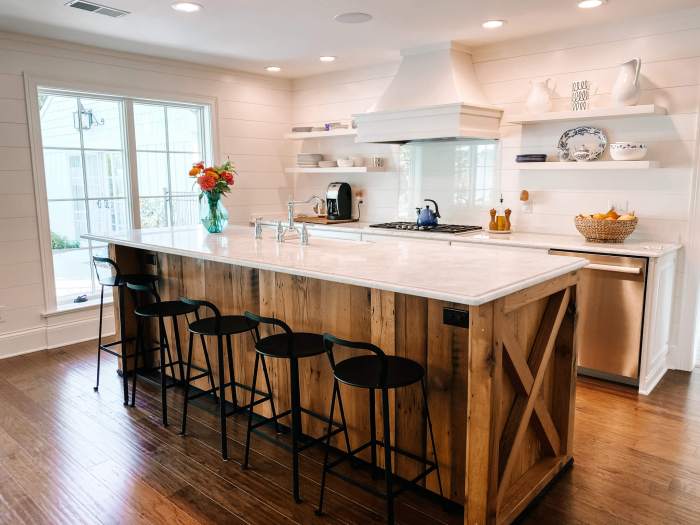
Creating the perfect kitchen island involves careful consideration of layout, features, and workflow. A well-designed island can significantly enhance both the functionality and aesthetic appeal of your kitchen, transforming it from a mere workspace into a central hub for cooking, dining, and socializing. This section explores key design elements to guide you through this crucial stage of your renovation.
Kitchen Island Layouts and Suitability
The ideal kitchen island layout depends heavily on the overall kitchen dimensions and shape. A large, open-plan kitchen offers greater flexibility, accommodating larger islands with multiple functions. Conversely, smaller kitchens might benefit from a smaller, more streamlined island design to avoid overcrowding.
For example, a galley kitchen might accommodate a slim, linear island that maximizes workspace and minimizes obstruction. In contrast, a spacious L-shaped kitchen could easily integrate a large island with seating, acting as both a preparation area and a casual dining space. U-shaped kitchens might benefit from a smaller island to avoid creating a cramped feel, perhaps focusing on functionality over expansive seating.
A square or rectangular kitchen can support a variety of island shapes and sizes depending on the desired functionality and aesthetic.
Designing a Kitchen Island with Integrated Features
A thoughtfully designed kitchen island can incorporate a range of features to enhance its utility and visual appeal. Consider incorporating seating, ample storage, and even integrated appliances to create a truly versatile centerpiece.
Imagine a kitchen island with a butcher block countertop for food preparation, complemented by a row of drawers for utensils and cookware. Beneath the countertop, consider incorporating a wine cooler or additional storage for larger appliances. The island could also feature a built-in microwave or even a small sink for added convenience. Integrated seating, perhaps in the form of bar stools, transforms the island into a casual dining area, perfect for quick meals or informal gatherings.
The choice of materials and finishes will further impact the overall aesthetic, from sleek, modern designs with stainless steel and quartz to more rustic styles featuring wood and natural stone.
Workflow and Ergonomics in Kitchen Island Design
The placement and design of your kitchen island should prioritize efficient workflow and ergonomic principles. Consider the “work triangle” – the relationship between the sink, stove, and refrigerator – ensuring the island doesn’t disrupt this essential flow. Sufficient counter space around the island is crucial for comfortable food preparation, allowing for easy movement and preventing bottlenecks.
Ergonomic considerations extend to the height of the countertop and the placement of seating. Countertop height should be comfortable for the primary users, allowing for easy chopping, mixing, and other tasks without strain. If incorporating seating, ensure bar stools are appropriately sized and positioned to avoid discomfort or hindering movement around the island. Careful consideration of these factors ensures a comfortable and efficient kitchen experience.
Examples of Kitchen Island Designs
Visualizing different designs can help solidify your vision. Let’s consider a few examples.
Example 1: Modern Minimalist Island: This island features a sleek, white quartz countertop, complemented by minimalist cabinetry in a matte gray finish. Recessed LED lighting provides ample illumination for food preparation. Sleek, brushed nickel hardware adds a touch of sophistication. The island is rectangular, offering ample workspace and incorporating a small built-in microwave.
Example 2: Rustic Farmhouse Island: This island showcases a warm, inviting aesthetic with a butcher block countertop and distressed wood cabinetry. Pendant lighting hangs above, casting a warm glow. Black iron hardware complements the rustic style. The island is slightly larger, incorporating seating for three people on one side, creating a casual dining space.
Example 3: Contemporary Island with Integrated Appliances: This island boasts a striking combination of dark gray cabinetry and a light-colored marble countertop. Integrated appliances, such as a dishwasher and a wine cooler, are seamlessly incorporated into the design. Under-cabinet lighting illuminates the workspace, while pendant lights add a touch of elegance. The island features a curved design, adding a touch of sophistication to the overall kitchen aesthetic.
This island is specifically designed for a larger kitchen space.
Construction and Installation
Constructing and installing a kitchen island is a multifaceted project requiring careful planning and execution. Success hinges on accurate measurements, proper material selection, and a methodical approach to each stage of the process, from framing to finishing touches. This section details the key steps involved in bringing your dream island to life.
Framing the Kitchen Island
Building a sturdy frame is paramount. This involves constructing a rectangular or custom-shaped box from pressure-treated lumber, typically 2x4s or 2x6s depending on the island’s size and intended load. The frame’s dimensions should precisely match your design plans, allowing for the thickness of the chosen countertop material. Corner joints are usually reinforced with metal brackets or screws for extra stability.
Ensure the frame is level and square before proceeding to the next steps. A spirit level and measuring tape are essential tools for this phase. Proper bracing within the frame is critical to prevent sagging over time, particularly if heavier materials are used in the construction.
Plumbing and Electrical Work for the Kitchen Island
Integrating plumbing and electrical components into the island requires careful planning and adherence to building codes. Plumbing, if necessary for a sink or dishwasher, should be roughed in before installing the cabinetry. This includes running pipes from the main water supply to the island’s location, ensuring proper venting and drainage. Consult a licensed plumber to ensure compliance with local regulations and to prevent future issues.
Similarly, electrical work should be handled by a qualified electrician. This involves running wiring from the main electrical panel to the island, providing outlets for appliances and lighting as needed. Properly grounding all electrical components is crucial for safety. Junction boxes should be installed within the frame to house wiring and ensure easy access for future maintenance or repairs.
Countertop Installation
Countertop installation is a critical step that significantly impacts the island’s aesthetic appeal and functionality. The process varies depending on the material chosen. Granite or quartz countertops typically require professional installation. The process usually involves precise measurements, cutting the material to fit the island’s frame, and then securing it with adhesive and clamps. A professional installer will ensure a seamless, polished finish.
For butcher block countertops, the process may involve attaching pre-cut slabs or assembling smaller pieces. This often requires specialized tools and woodworking skills. Laminate countertops are generally easier to install and can be cut to size with standard woodworking tools. Securing the laminate to the underlying substrate usually involves adhesive and proper clamping.
Building a Kitchen Island from Scratch
Building a kitchen island from scratch offers complete customization. One common method involves constructing a frame as previously described, then adding plywood sheathing for stability and to provide a surface for attaching cabinetry and countertops. Alternatively, the island can be built using solid wood framing, which provides a more robust and potentially more aesthetically pleasing construction. In either case, careful planning and precise measurements are essential.
Tools required include a circular saw, drill, level, measuring tape, and various woodworking hand tools. Materials needed will depend on the design, but will likely include lumber, plywood, screws, adhesive, and any chosen countertop material.
Assembling Pre-fabricated Kitchen Island Cabinets
Assembling pre-fabricated cabinets is a more straightforward process than building from scratch. The process typically begins by carefully reviewing the manufacturer’s instructions and organizing all components. Each cabinet typically arrives with pre-drilled holes and pre-cut pieces. Assembly often involves attaching cabinet sides to the top and bottom panels using screws and dowels, followed by attaching doors and drawer fronts.
A level is crucial to ensure that each cabinet is installed plumb and square. Once all cabinets are assembled, they are typically secured to the frame using screws and brackets. A final check for levelness and squareness is crucial before proceeding to the countertop installation. Descriptive images would show the various steps, such as attaching cabinet sides to the top and bottom, installing drawer slides, hanging doors using hinges, and securing the cabinets to the frame.
Finishing Touches and Accessories
Now that the structure and functionality of your kitchen island are complete, it’s time to focus on the details that will truly elevate the space and make it your own. The finishing touches and accessories you choose will significantly impact both the aesthetic appeal and the practical usability of your island. Careful consideration of lighting, storage, seating, and additional accessories will transform your island from a functional element into a stunning focal point of your kitchen.
Kitchen Island Lighting Options
Appropriate lighting is crucial for both functionality and ambiance. A well-lit island improves task efficiency and enhances the overall atmosphere of the kitchen. Pendant lights offer a classic and stylish option, providing focused illumination directly over the island. Recessed lighting can be incorporated into the ceiling for ambient lighting, complementing the pendants. Under-cabinet lighting, installed beneath the island’s countertop, offers task lighting for food preparation and creates a modern, sleek look.
The style and number of lights chosen should depend on the size of the island and the overall kitchen design. For example, a large island might benefit from a cluster of three or four pendant lights, while a smaller island might only need one or two. A farmhouse-style kitchen might incorporate rustic pendant lights, whereas a modern kitchen might opt for sleek, minimalist fixtures.
Unique Kitchen Island Storage Solutions
Smart storage solutions maximize the island’s utility. Beyond standard drawers and cabinets, consider incorporating features like pull-out spice racks, built-in cutting boards, or even a hidden trash and recycling system. Utilizing vertical space with narrow, deep drawers is an excellent way to store items efficiently. A built-in wine rack can add a touch of elegance and functionality.
Customizable drawer dividers allow for organized storage of utensils and other kitchen essentials. For example, a butcher block countertop can double as a prep surface and provide additional storage underneath. Similarly, drawers fitted with specialized inserts can neatly accommodate knives, cutlery, and other frequently used items.
Kitchen Island Seating Options
The seating arrangement around your kitchen island significantly influences its functionality and social aspects. Bar stools are a popular choice, offering a range of styles and heights to complement different island designs. Consider the height of your countertop when selecting bar stools; standard bar stools are typically taller than counter stools. If space allows, comfortable chairs can create a more relaxed dining area.
For example, a breakfast bar with counter height seating might be paired with comfortable, cushioned counter stools, while a taller island might benefit from traditional bar stools with backrests for added support. The material of the stools should also be considered – wood, metal, or plastic – depending on the overall style of the kitchen.
Accessories to Enhance Kitchen Island Functionality and Aesthetics
A selection of well-chosen accessories can elevate the island’s design and improve its usability.
- Cutting boards: A large, sturdy cutting board is essential for food preparation.
- Utensil holders: Keep frequently used utensils within easy reach.
- Spice racks: Easily accessible spice racks streamline cooking.
- Fruit bowls: Add a touch of color and keep fruit fresh.
- Plant holders: Introduce greenery for a touch of nature.
- Decorative trays: Organize and display items beautifully.
- Wine rack (if applicable): A stylish addition for wine enthusiasts.
Kitchen Renovation (Broader Scope)
A complete kitchen renovation is a significant undertaking, impacting not only the aesthetic appeal of your home but also its functionality and value. Successful projects require careful planning, skilled execution, and a comprehensive understanding of the various stages involved. This section provides an overview of the entire process, highlighting key considerations and the importance of professional expertise.A successful kitchen renovation hinges on meticulous planning and the expertise of qualified professionals.
Engaging specialists ensures the project adheres to building codes, utilizes high-quality materials, and results in a functional, beautiful space.
Hiring Qualified Professionals
Selecting the right professionals is crucial for a smooth and successful renovation. Different trades require different skill sets. A general contractor can manage the overall project, coordinating the work of plumbers, electricians, carpenters, and other specialists. Employing a dedicated kitchen designer can help optimize the space and ensure the layout meets your needs and style preferences. Each specialist brings unique expertise, ensuring the quality and safety of the work.
For example, an experienced electrician understands the complexities of kitchen electrical systems, preventing potential hazards and ensuring proper functionality of appliances. Similarly, a skilled plumber can handle intricate plumbing configurations and prevent leaks.
Kitchen Layouts and Space Utilization
Kitchen layouts significantly influence workflow and space utilization. Common layouts include L-shaped, U-shaped, galley, island, and peninsula designs. An L-shaped kitchen is efficient for smaller spaces, maximizing corner storage. A U-shaped kitchen provides ample counter space and storage but requires a larger footprint. Galley kitchens are ideal for narrow spaces, promoting efficient movement.
Island and peninsula layouts add extra counter space and seating, enhancing both functionality and social interaction. The choice of layout should consider the size of the kitchen, the number of people using it, and their cooking habits. For instance, a large family might benefit from a U-shaped layout with an island, while a smaller apartment might be better suited to an L-shaped or galley kitchen.
Typical Kitchen Renovation Timeline
A typical kitchen renovation project can take anywhere from 4 to 12 weeks, depending on the scope of work and unforeseen complications. This timeline provides a general overview; actual timelines may vary.
- Planning & Design (1-2 weeks): This involves initial consultations, measurements, design development, material selection, and securing necessary permits.
- Demolition (1-2 days): Removal of existing cabinets, countertops, appliances, and flooring.
- Plumbing & Electrical (1-2 weeks): Installation or relocation of plumbing fixtures and electrical wiring.
- Cabinet Installation (1-2 weeks): Installation of new cabinets and drawers.
- Countertop Installation (1-2 days): Installation of countertops (granite, quartz, etc.).
- Flooring Installation (1-2 days): Installation of new flooring (tile, wood, etc.).
- Appliance Installation (1-2 days): Installation of new appliances (oven, refrigerator, dishwasher, etc.).
- Finishing Touches (1-2 weeks): Painting, backsplash installation, lighting fixtures, and final cleaning.
This timeline is an estimate and can vary based on project complexity and unforeseen issues. For example, discovering unexpected structural problems during demolition could significantly delay the project. Contingency planning is crucial to mitigate potential delays and cost overruns.
Renovating your kitchen island is a significant undertaking, but with careful planning and execution, the results can be truly transformative. This guide has provided a comprehensive overview, from initial conceptualization to the final finishing touches. By thoughtfully considering design elements, material choices, and installation procedures, you can create a stunning and functional island that elevates your kitchen’s aesthetic appeal and enhances its practicality.
Remember to prioritize your needs and preferences throughout the process, resulting in a kitchen island perfectly tailored to your lifestyle.
FAQ Corner
What is the average cost of a kitchen island renovation?
Costs vary greatly depending on size, materials, and complexity, ranging from a few thousand to tens of thousands of dollars.
How long does a kitchen island renovation typically take?
The timeframe depends on project scope and can range from a few weeks to several months.
Do I need permits for a kitchen island renovation?
Permits may be required depending on your location and the extent of the renovation. Check with your local building department.
Can I renovate my kitchen island myself?
While possible for simpler projects, complex renovations often require professional expertise for plumbing and electrical work.


