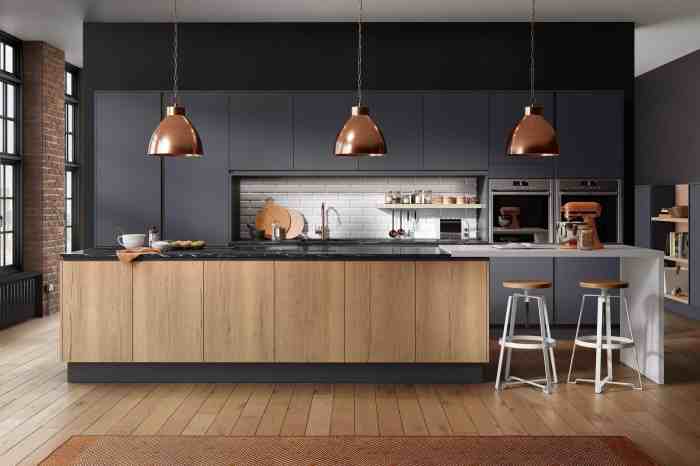
Modern kitchen design transcends mere aesthetics; it’s a fusion of functionality, innovative technology, and enduring style. This exploration delves into the core principles shaping contemporary kitchens, from the evolution of design philosophies to the latest trends in materials, layouts, and smart appliances. We’ll examine how color palettes, lighting schemes, and efficient storage solutions contribute to the overall ambiance and usability of a modern kitchen.
We’ll cover everything from selecting durable and visually appealing countertop materials to optimizing workflow and incorporating smart technology seamlessly. This guide aims to provide a comprehensive overview, equipping you with the knowledge to design or renovate a kitchen that reflects your personal style and meets your practical needs.
Layout and Functionality in Modern Kitchens
Modern kitchen design prioritizes both aesthetic appeal and efficient functionality. A well-planned layout significantly impacts the ease and enjoyment of cooking and food preparation. Understanding the principles of various layouts and incorporating smart storage solutions are crucial for creating a truly modern and practical kitchen space.
Efficient kitchen layouts are designed to minimize movement and maximize workflow. The most common configurations—galley, L-shaped, and U-shaped—each offer unique advantages and suit different spaces and needs. A galley kitchen, characterized by two parallel countertops, is ideal for smaller spaces, promoting a streamlined workflow. The L-shaped layout offers more counter space and storage, making it versatile for various kitchen sizes.
The U-shaped layout provides ample counter space and storage, ideal for larger kitchens and families who spend significant time cooking. The choice depends heavily on the available space and the user’s cooking habits.
Efficient Kitchen Layouts: Galley, L-Shaped, and U-Shaped
The optimal layout hinges on the principles of the “kitchen work triangle,” which connects the sink, stove, and refrigerator. An efficient triangle minimizes unnecessary steps between these three key areas. In a galley kitchen, this triangle is naturally formed along the two parallel counters. An L-shaped kitchen allows for a more flexible arrangement of the triangle, offering increased counter space.
A U-shaped kitchen often incorporates the triangle within the U, maximizing efficiency and work surface area. Consideration should also be given to the placement of other appliances, such as dishwashers and ovens, to further optimize workflow.
Modern Kitchen Layout Design: Functionality and Aesthetics
Consider a modern kitchen design incorporating an L-shaped layout for optimal functionality and aesthetics. Imagine a sleek, minimalist design with white cabinetry, complemented by a dark grey quartz countertop. The sink and dishwasher are positioned near each other, followed by ample counter space for food preparation. The stovetop is strategically placed near an external window for natural light and ventilation.
The refrigerator is tucked away in a corner, maximizing space and minimizing visual clutter. Open shelving displays carefully selected tableware, adding a touch of personality to the otherwise minimalist aesthetic. This layout incorporates the kitchen work triangle efficiently while offering generous counter space for food preparation and cooking.
Smart Storage Solutions in Modern Kitchens
Smart storage is paramount in modern kitchen design. It’s not merely about having enough space but about optimizing access and maximizing the use of available area. This involves employing a variety of storage solutions to accommodate different types of items.
- Pull-out drawers and shelves: These provide easy access to items stored in the back of cabinets, eliminating the need to rummage.
- Corner cabinets with specialized organizers: These maximize the often-wasted space in corner cabinets, making items easily accessible.
- Vertical storage solutions: Tall, narrow cabinets can be used to store items like spices or canned goods, maximizing vertical space.
- Under-sink organizers: These utilize the often-underutilized space under the sink, keeping cleaning supplies neatly organized.
Kitchen Islands and Peninsulas in Modern Design
Kitchen islands and peninsulas are increasingly popular features in modern kitchens, offering significant benefits beyond aesthetics. They add valuable counter space, often incorporating a sink or cooktop, extending the kitchen work triangle and improving functionality.
A central island can serve as a focal point, providing additional workspace for food preparation, casual dining, or even informal gatherings. A peninsula, essentially a shorter, attached island, can similarly provide extra counter space and storage while defining different zones within the kitchen. The choice between an island and a peninsula depends on the available space and the desired level of functionality.
Both features significantly enhance the overall usability and aesthetic appeal of a modern kitchen.
Appliances and Technology in Modern Kitchens
Modern kitchens are no longer just spaces for food preparation; they’ve evolved into technologically advanced hubs integrating seamlessly with our increasingly digital lives. The appliances and smart technology incorporated reflect this shift, prioritizing efficiency, convenience, and a streamlined user experience. This section will explore the state-of-the-art appliances and smart features transforming contemporary kitchen design.
State-of-the-art appliances are redefining culinary possibilities and kitchen workflow. Induction cooktops, for example, offer precise temperature control and rapid heating, enhancing cooking precision and safety. Smart ovens with built-in sensors and Wi-Fi connectivity allow for remote monitoring and control, even preheating from your smartphone. Integrated refrigerators with advanced features such as internal cameras for inventory management and touchscreen displays for recipe access are becoming increasingly common.
Furthermore, advancements in dishwasher technology offer quieter operation, improved cleaning performance, and even features like automatic detergent dispensing. High-end appliances often incorporate sophisticated materials and designs, adding to the overall aesthetic appeal of the modern kitchen.
Smart Technology Integration in Modern Kitchens
The integration of smart technology is rapidly changing how we interact with our kitchens. Smart refrigerators, equipped with touchscreens and internet connectivity, offer features such as grocery list creation, recipe suggestions based on available ingredients, and even the ability to order groceries directly through the appliance. Smart ovens provide precise temperature control, automated cooking programs, and remote monitoring capabilities.
Smart dishwashers optimize cleaning cycles based on load size and soil level, conserving water and energy. Smart ranges often include features like built-in scales for precise ingredient measurements and connectivity to smart home systems for voice control. These smart features contribute to a more efficient, convenient, and connected culinary experience.
Kitchen Lighting Schemes in Modern Designs
Appropriate lighting is crucial for creating a functional and aesthetically pleasing modern kitchen. Different lighting schemes cater to various needs and design aesthetics. Task lighting, often achieved through under-cabinet lighting or recessed spotlights, provides focused illumination for food preparation and cooking. Ambient lighting, typically provided by ceiling fixtures or pendant lights, creates a general atmosphere and illuminates the entire space.
Accent lighting, such as track lighting or strategically placed spotlights, highlights architectural details or artwork. Modern kitchens often incorporate a layered lighting approach, combining these different types of lighting to create a versatile and adaptable illumination scheme. For instance, a combination of recessed downlights for general illumination, under-cabinet LEDs for task lighting, and a statement pendant light above an island offers both functionality and visual interest.
The choice of light fixtures should also complement the overall design style, with minimalist designs often preferred in modern kitchens.
Color Palettes and Lighting in Modern Kitchens
The careful selection of color palettes and lighting schemes is crucial in achieving the desired aesthetic and functionality of a modern kitchen. These elements work synergistically to create an atmosphere that is both stylish and practical, impacting everything from mood and ambiance to task performance and overall user experience. A well-designed lighting plan, combined with a thoughtfully chosen color palette, can dramatically enhance the space, making it feel larger, brighter, and more inviting.
Modern Kitchen Color Palettes
Choosing the right color palette is paramount in setting the tone of a modern kitchen. The palette should reflect the homeowner’s personal style while complementing the overall design aesthetic. Here are three distinct color palettes that work well in contemporary kitchen spaces:
- Palette 1: Neutral Elegance: This palette centers around warm, neutral tones. Walls painted in a soft, creamy white (like Benjamin Moore’s “White Dove”) provide a clean backdrop. Cabinetry is in a light gray (Sherwin-Williams “Agreeable Gray”) or a warm beige, creating a sense of spaciousness. Accent colors are introduced through natural wood tones (e.g., light oak or maple) in countertops and flooring, and subtle brass or brushed nickel finishes on hardware and lighting fixtures.
This palette offers a sophisticated, timeless feel.
- Palette 2: Bold Monochromatic: This palette utilizes varying shades of a single color, creating a sense of sophisticated simplicity. A deep charcoal gray (Benjamin Moore “Black Beauty”) on the walls acts as a dramatic backdrop. Cabinets in a slightly lighter shade of gray (Farrow & Ball “Down Pipe”) offer contrast while maintaining a cohesive look. Stainless steel appliances and countertops blend seamlessly, and white or light gray backsplashes add brightness.
Black accents, such as bar stools or pendant lights, add visual interest. This creates a sleek and modern ambiance.
- Palette 3: Vibrant Minimalism: This palette incorporates a pop of vibrant color against a neutral base. Walls are painted in a crisp white (Sherwin-Williams “Pure White”). Cabinets are a clean, light wood (like birch) or a soft, muted blue (Benjamin Moore “Hale Navy”). A bold accent color, such as a deep teal or emerald green, is introduced through kitchen accessories, backsplash tiles, or even an island countertop.
This palette provides a cheerful, contemporary feel without being overwhelming.
The Impact of Lighting on Modern Kitchens
Lighting plays a multifaceted role in the success of a modern kitchen design. It influences not only the visual appeal but also the functionality and overall atmosphere of the space. Proper lighting enhances visibility for food preparation and cleaning, creates a welcoming ambiance for socializing, and can even impact the perceived size and spaciousness of the room. Poor lighting, on the other hand, can lead to eye strain, accidents, and a generally unpleasant cooking experience.
The interplay of light and shadow can dramatically alter the perception of texture, color, and depth within the kitchen.
Lighting Options for Modern Kitchens
A layered lighting approach is essential in modern kitchen design, combining various types of lighting to achieve optimal illumination and ambiance.
- Ambient Lighting: This provides overall illumination. Recessed lighting is a popular choice, offering even distribution of light. Pendant lights above islands or breakfast bars add style and focused illumination. Track lighting allows for flexible positioning and adjustable brightness.
- Task Lighting: This is crucial for food preparation and cleaning. Under-cabinet lighting illuminates countertops, while integrated lights within range hoods provide focused illumination for cooking. Pendant lights over specific work areas also serve this function.
- Accent Lighting: This highlights architectural features or decorative elements. Cabinet lighting, backsplash lighting, and strategically placed spotlights can showcase specific textures, colors, or materials. This adds depth and visual interest to the kitchen.
Kitchen Renovation Considerations
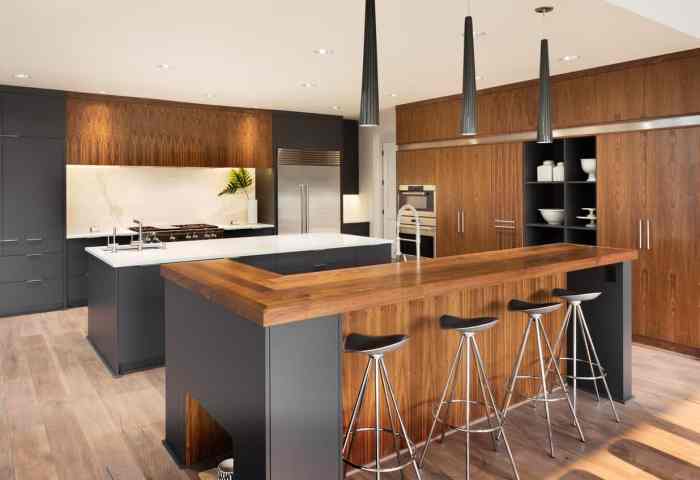
Undertaking a modern kitchen renovation is a significant undertaking, requiring careful planning, budgeting, and execution. Success hinges on a well-defined strategy that addresses every stage of the project, from initial design concepts to final walkthroughs. Ignoring crucial steps can lead to cost overruns, delays, and dissatisfaction with the final result. This section Artikels key considerations to ensure a smooth and successful renovation.
Planning a Modern Kitchen Renovation Project
Effective planning is paramount for a successful kitchen renovation. This involves a series of steps designed to transform your vision into a tangible reality. First, define the scope of the project: will it be a complete overhaul or a targeted update? Next, create detailed drawings or utilize 3D design software to visualize the layout and appliance placement.
This allows for adjustments before construction begins. Following this, source materials and appliances, comparing prices and features to find the best value. Finally, establish a realistic timeline, factoring in potential delays and scheduling conflicts with contractors. Thorough planning minimizes surprises and keeps the project on track.
Budgeting and Managing a Kitchen Renovation
Budgeting is crucial; unexpected costs can derail even the best-laid plans. Start by establishing a realistic budget, considering not just materials and labor but also permits, unforeseen repairs, and potential contingency funds (typically 10-20% of the total budget). Track expenses meticulously throughout the renovation, comparing actual costs against the budget. Explore financing options, such as home equity loans or personal loans, if needed.
Regularly review your budget and make adjustments as necessary. For example, if you find tile costs are exceeding expectations, consider a less expensive alternative without compromising the overall design aesthetic.
Hiring Qualified Professionals
Engaging qualified professionals is essential for a successful renovation. Thoroughly research and interview potential contractors, plumbers, electricians, and other specialists. Check references, verify licenses and insurance, and review past projects. A well-qualified team can manage the project efficiently, adhering to building codes and ensuring quality workmanship. Clear communication and a well-defined contract are crucial.
The contract should detail the scope of work, payment schedules, and timelines, protecting both you and the contractors.
Potential Challenges and Solutions During a Kitchen Renovation
Renovations often encounter unforeseen challenges. One common issue is discovering hidden problems during demolition, such as outdated plumbing or electrical wiring. Having a contingency plan for such discoveries is vital. Another potential challenge is material delays; sourcing materials can take longer than anticipated. Mitigation strategies include ordering materials well in advance and having backup options available.
Finally, communication breakdowns between contractors and homeowners can lead to conflict. Regular communication, clear expectations, and documented agreements minimize these risks. For example, a detailed schedule with milestone checkpoints helps manage expectations and facilitates timely completion.
Modern Kitchen Design Trends
Modern kitchen design is constantly evolving, reflecting shifts in lifestyle, technology, and environmental awareness. Current trends prioritize functionality, sustainability, and a seamless integration of technology, creating spaces that are both stylish and practical. This section will explore some of the most prominent trends shaping the modern kitchen landscape.
Several key factors drive these evolving trends. Increased interest in sustainable living influences material choices and appliance selection. Technological advancements continuously introduce smart appliances and innovative storage solutions. Furthermore, a growing preference for open-plan living means kitchens are no longer isolated spaces but rather central hubs within the home, demanding design solutions that enhance both aesthetics and functionality.
Sustainable Materials and Practices
The incorporation of sustainable materials is a defining feature of modern kitchen design. Consumers are increasingly conscious of the environmental impact of their choices, leading to a surge in demand for eco-friendly options. This includes using reclaimed wood for cabinetry, countertops made from recycled materials like glass or concrete, and bamboo flooring, which is both durable and renewable.
Furthermore, the use of low-VOC (volatile organic compound) paints and finishes minimizes harmful emissions within the home environment. Many designers now prioritize locally sourced materials to reduce transportation costs and carbon footprints, contributing to a more sustainable and responsible approach to kitchen design.
Smart Kitchen Technology
Smart technology is rapidly transforming the modern kitchen, offering increased convenience and efficiency. Smart refrigerators with built-in touchscreens allow for inventory management and recipe access. Smart ovens provide precise temperature control and remote monitoring capabilities. Integrated voice assistants facilitate hands-free operation of appliances and lighting. These advancements streamline kitchen tasks, improve organization, and enhance the overall user experience.
For example, a smart appliance ecosystem could automatically adjust the oven temperature based on a recipe loaded onto the smart refrigerator’s touchscreen, ensuring perfect cooking results.
Minimalist Aesthetics and Open Shelving
Minimalist aesthetics continue to dominate modern kitchen design. Clean lines, simple forms, and a neutral color palette create a sense of calm and order. Open shelving replaces traditional upper cabinets in many designs, showcasing beautiful dishware and cookware while enhancing the feeling of spaciousness. This trend reflects a shift towards a less cluttered and more visually appealing kitchen environment.
The open shelving, however, requires careful curation of items to maintain a sense of tidiness and avoid visual clutter. This necessitates a more organized and streamlined approach to storage and kitchenware selection.
Multifunctional Kitchen Islands
The kitchen island has evolved from a simple work surface into a highly versatile and multifunctional element. Modern islands often incorporate seating for casual dining, integrated storage solutions, and even built-in appliances like sinks, cooktops, or wine coolers. This design maximizes space utilization and enhances the kitchen’s social function, creating a central gathering point within the home. A well-designed island can seamlessly blend work and social areas, facilitating both meal preparation and informal gatherings.
Bold Color Accents and Textural Contrasts
While neutral palettes remain popular, modern kitchens increasingly incorporate bold color accents and textural contrasts to add personality and visual interest. Dark cabinetry paired with light countertops, or vibrant backsplashes against a neutral backdrop, create striking visual effects. The integration of different materials, such as wood, stone, and metal, adds depth and complexity to the overall design. This approach allows for customization and personalization, reflecting the homeowner’s unique style and preferences.
For instance, a deep navy cabinetry paired with a light marble countertop and brass hardware offers a sophisticated and visually engaging contrast.
Illustrative Examples of Modern Kitchens
Modern kitchen design offers a diverse range of styles, each reflecting unique preferences and lifestyles. The following examples showcase the versatility and adaptability of modern aesthetics, highlighting how different material choices, layouts, and appliances can create distinct yet equally stunning spaces. These examples are not exhaustive, but they serve to illustrate the breadth of possibilities within the modern kitchen design realm.
Modern Minimalist Kitchen
This design prioritizes clean lines, simplicity, and functionality. Imagine a kitchen dominated by a neutral color palette, perhaps a soft white or light gray, accented with subtle metallic elements like brushed stainless steel.
- Layout: An open-plan layout seamlessly integrates the kitchen with the adjacent living area, enhancing spaciousness and promoting interaction. A large island serves as both a prep area and a casual dining space.
- Materials: Sleek, matte-finish cabinetry made of high-quality wood veneer or lacquered MDF provides a sophisticated yet understated look. Countertops are likely composed of quartz or a similar durable, low-maintenance material, chosen for its clean lines and easy upkeep.
- Appliances: Integrated appliances, seamlessly hidden within the cabinetry, maintain the clean, uncluttered aesthetic. High-end, energy-efficient appliances, perhaps featuring smart technology, are incorporated to enhance both functionality and efficiency.
- Aesthetic: The overall aesthetic is one of understated elegance. The focus is on quality materials and craftsmanship, rather than overt ornamentation or bold colors. Minimalist decor, such as a single statement piece of art or a carefully curated collection of cookbooks, completes the look.
Modern Farmhouse Kitchen
This style blends the rustic charm of a farmhouse with the sleek lines and functionality of modern design. Think warm, inviting spaces that balance practicality with a touch of vintage appeal.
- Layout: A galley or L-shaped layout is common, maximizing space efficiency while maintaining a sense of coziness. A large farmhouse sink, often made of apron-front cast iron, is a central feature.
- Materials: Natural materials, such as reclaimed wood, whitewashed brick, and butcher block countertops, are prominent. Open shelving displays handcrafted pottery or vintage kitchenware, adding character and warmth.
- Appliances: While the aesthetic leans towards rustic, appliances are typically modern and energy-efficient. Stainless steel appliances blend seamlessly with the overall style, while a range hood with a decorative metal finish adds a touch of farmhouse charm.
- Aesthetic: The overall aesthetic is warm, inviting, and slightly rustic, but with a clean and modern edge. The blend of old and new creates a unique and comfortable space.
Modern Industrial Kitchen
This style embraces raw, exposed materials and a utilitarian aesthetic, creating a space that is both stylish and functional. The look is characterized by a sense of openness and a celebration of industrial elements.
- Layout: An open-plan layout is ideal, showcasing the industrial elements and maximizing space. A large island provides ample prep space and can incorporate seating for casual dining.
- Materials: Exposed brick walls, concrete floors, and metal accents are key features. Metal cabinetry, often with a distressed or aged finish, adds to the industrial feel. Concrete or stainless steel countertops provide a durable and easy-to-clean surface.
- Appliances: Stainless steel appliances are a natural fit for this style, blending seamlessly with the overall aesthetic. A professional-grade range or oven might be incorporated to enhance functionality.
- Aesthetic: The overall aesthetic is raw, edgy, and functional. The focus is on showcasing the inherent beauty of industrial materials and creating a space that feels both stylish and lived-in.
Designing or renovating a modern kitchen is a journey of creativity and careful planning. By understanding the key principles of modern design, exploring various materials and layouts, and integrating smart technology thoughtfully, you can create a space that is both beautiful and highly functional. Remember that the best modern kitchen is one that perfectly reflects your lifestyle and preferences, merging style with practical considerations for a truly personalized and enjoyable culinary experience.
Query Resolution
What is the difference between modern and contemporary kitchen design?
While often used interchangeably, “modern” typically refers to designs from the mid-20th century, emphasizing clean lines and functionality. “Contemporary” encompasses current trends, which may incorporate elements from various styles.
How much does a modern kitchen renovation typically cost?
Costs vary greatly depending on size, materials, and complexity. Expect a wide range, from a few thousand dollars for minor updates to tens of thousands for a complete overhaul.
What are some eco-friendly choices for a modern kitchen?
Consider sustainable materials like bamboo cabinetry, recycled glass countertops, and energy-efficient appliances. Look for certifications like FSC (Forest Stewardship Council) for wood products.
How can I maximize storage in a small modern kitchen?
Utilize vertical space with tall cabinets, incorporate pull-out drawers and organizers, and consider built-in appliances to free up counter space.


