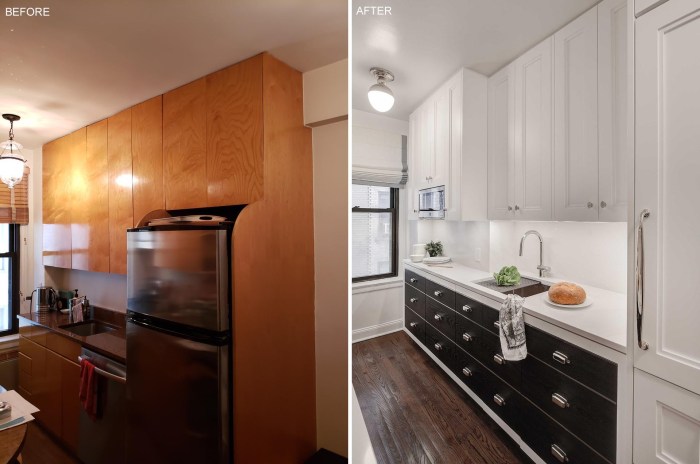
Transforming a dated kitchen into a culinary haven is a journey filled with exciting possibilities and careful planning. This guide delves into the complete process of a kitchen remodel, from initial assessment and design to the final reveal. We’ll navigate the challenges of outdated layouts, explore various design styles and materials, and offer practical advice to ensure a successful and aesthetically pleasing outcome, maximizing both functionality and home value.
We’ll cover everything from budgeting and choosing the right contractors to understanding the intricacies of demolition, installation, and the importance of adhering to safety regulations. Whether you’re a seasoned DIY enthusiast or prefer the expertise of professionals, this comprehensive guide will equip you with the knowledge to embark on your kitchen remodel with confidence.
Pre-Remodel Kitchen Assessment
Undertaking a kitchen remodel is a significant investment, both financially and emotionally. A thorough pre-remodel assessment is crucial to ensure the project’s success and to avoid costly surprises down the line. This assessment goes beyond simply admiring (or lamenting) the existing state; it’s a detailed evaluation of the kitchen’s functionality, structural integrity, and potential challenges.A typical outdated kitchen presents several challenges.
These range from aesthetic issues like dated cabinetry and flooring to more serious problems impacting functionality and safety. Often, the layout itself hinders efficient workflow, and outdated appliances consume excessive energy. Furthermore, a lack of adequate storage can lead to clutter and frustration.
Common Issues in Kitchens Before Renovation
Outdated kitchens frequently exhibit a combination of problems. Cracked or worn countertops, peeling paint, and damaged flooring are common cosmetic issues. However, more significant concerns include inadequate ventilation, leading to moisture buildup and potential mold growth. Faulty plumbing and electrical systems pose safety hazards and can increase repair costs. Finally, inefficient layouts create bottlenecks and make daily kitchen tasks cumbersome.
For example, a stove far from the sink and refrigerator necessitates unnecessary steps and increases the risk of spills.
Evaluating Kitchen Layout and Functionality
Assessing the kitchen’s layout involves analyzing the workflow triangle – the relationship between the sink, stove, and refrigerator. Ideally, these three elements should form a triangle with sides measuring approximately 9 to 13 feet. A poorly designed layout can significantly impact efficiency. Consider the placement of cabinets, appliances, and workspaces. Are there enough counter spaces?
Is there sufficient storage? Is the lighting adequate? Observing how the kitchen is currently used can reveal areas for improvement. For example, if the pantry is inconveniently located, this suggests a need for better storage solutions in the remodel.
Kitchen Structural Integrity Checklist
Before any demolition begins, a careful assessment of the kitchen’s structural integrity is paramount. This checklist helps identify potential problems that could affect the remodeling process and budget.
- Cabinetry: Inspect cabinets for structural damage, loose hinges, and rotting wood. Note the overall condition and potential for reuse or replacement.
- Flooring: Check for subfloor damage, unevenness, and signs of water damage. This will influence the type of flooring suitable for the remodel.
- Walls: Examine walls for cracks, water stains, or signs of pest infestation. Assess their stability and the need for repairs or reinforcement.
- Plumbing: Inspect pipes for leaks, corrosion, or outdated materials. Note the location of water lines and drainpipes for planning purposes.
- Electrical: Check for outdated wiring, insufficient outlets, and faulty switches. A qualified electrician should assess the electrical system’s capacity to handle new appliances.
- Ventilation: Evaluate the existing ventilation system. Is it sufficient for a remodeled kitchen? Consider upgrading the ventilation system to meet current standards.
Addressing these points proactively ensures a smoother, safer, and more cost-effective kitchen remodel. Ignoring these assessments can lead to unexpected delays, cost overruns, and even structural problems after the renovation is complete. For instance, discovering faulty plumbing during demolition can significantly disrupt the project timeline and budget.
Planning the Kitchen Remodel
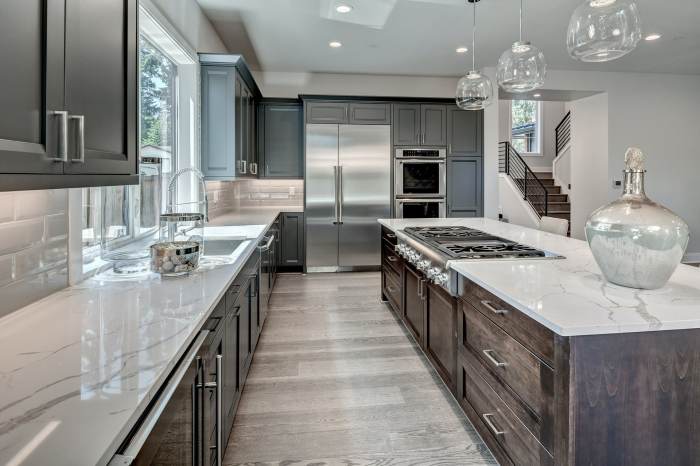
Planning a kitchen remodel involves careful consideration of several key factors to ensure the project aligns with your vision, budget, and lifestyle. A well-defined plan minimizes surprises and maximizes the outcome, transforming your kitchen into a space that reflects your needs and enhances your home’s value.
Kitchen Layout Designs
Effective kitchen design maximizes workflow and space utilization. Three different layouts are presented below, each showcasing alternative appliance placements for a typical-sized kitchen (approximately 10ft x 12ft). Dimensions are approximate and can be adjusted based on your specific space.
| Dimension (ft) | Appliance/Feature | Dimension (ft) | Appliance/Feature |
|---|---|---|---|
| 2×3 | Sink | 3×4 | Refrigerator |
| 3×3 | Cooktop | 2×2 | Dishwasher |
| 4×2 | Oven | 1×4 | Pantry |
| Layout 1: L-Shaped Kitchen. This layout efficiently uses corner space and creates a natural workflow triangle between the sink, cooktop, and refrigerator. | |||
| Dimension (ft) | Appliance/Feature | Dimension (ft) | Appliance/Feature |
|---|---|---|---|
| 3×3 | Refrigerator | 2×3 | Sink |
| 3×4 | Countertop Prep Area | 2×2 | Dishwasher |
| 3×3 | Cooktop/Oven Combo | 1×4 | Pantry |
| Layout 2: Galley Kitchen. This layout is ideal for smaller spaces, maximizing efficiency with a linear workflow. | |||
| Dimension (ft) | Appliance/Feature | Dimension (ft) | Appliance/Feature |
|---|---|---|---|
| 4×3 | Island with Cooktop & Seating | 2×3 | Sink |
| 3×2 | Dishwasher | 3×4 | Refrigerator |
| 2×2 | Oven | 1×4 | Pantry |
| Layout 3: Island Kitchen. An island adds significant counter space and can incorporate seating, making it ideal for entertaining. | |||
Kitchen Remodel Budget Breakdown
A realistic budget is crucial for successful project management. This mid-range budget example assumes a 10ft x 12ft kitchen. Prices can vary significantly based on location and material choices.
- Design & Planning: $1,000 – $2,500 (Includes architect/designer fees and permits)
- Demolition & Disposal: $1,500 – $3,000
- Cabinets: $5,000 – $15,000 (Mid-range quality, depending on style and material)
- Countertops: $3,000 – $8,000 (Quartz or engineered stone)
- Appliances: $5,000 – $12,000 (Mid-range appliances)
- Flooring: $2,000 – $5,000 (Tile or Luxury Vinyl Plank)
- Plumbing & Electrical: $3,000 – $6,000
- Painting & Finishing: $1,000 – $3,000
- Labor: $10,000 – $20,000 (This is a significant portion of the budget and varies greatly based on location and contractor)
- Contingency: 10-15% of total estimated cost (For unexpected expenses)
Countertop Material Comparison
The choice of countertop material significantly impacts both aesthetics and budget.
| Material | Cost (per sq ft) | Durability | Aesthetics |
|---|---|---|---|
| Granite | $50 – $150 | High; heat and scratch resistant | Natural variation; wide range of colors and patterns |
| Quartz | $60 – $120 | High; non-porous and stain resistant | Uniform appearance; wide range of colors and patterns |
| Laminate | $10 – $30 | Moderate; susceptible to scratches and heat damage | Wide range of styles and patterns; less expensive option |
Kitchen Cabinetry Design Styles
Cabinet style significantly influences the overall kitchen aesthetic.
- Shaker: Simple, clean lines with a recessed panel door. Offers a timeless and versatile look suitable for various design styles.
- Modern: Sleek, minimalist design with flat panel doors and often handleless designs. Creates a contemporary and sophisticated feel.
- Traditional: Ornate details, raised panel doors, and often decorative hardware. Provides a classic and elegant look.
The Renovation Process
The kitchen remodel’s core lies in the transformation from existing structure to the envisioned design. This involves a meticulous demolition phase followed by precise installation of new fixtures and fittings. Careful planning and execution are crucial for a successful outcome, ensuring both functionality and aesthetic appeal. This section details the steps involved in both demolition and installation.
Demolition Phase
Demolition requires careful planning and execution to ensure safety and minimize damage. Before beginning, disconnect all utilities – gas, electricity, and water – at the main service panel and shut off valves. This is paramount for safety. Protective gear, including safety glasses, gloves, and a dust mask, should be worn at all times. The process typically involves removing existing cabinets, countertops, flooring, and appliances.
Careful dismantling of fixtures is important to salvage reusable components or minimize waste. Walls may require partial or complete removal depending on the design. Debris should be removed promptly and disposed of responsibly. Regular site inspections are crucial to identify any unforeseen issues.
Cabinet Installation
Installing new kitchen cabinets is a multi-step process demanding precision. Begin by leveling and securing the base cabinets to the wall using appropriate fasteners. Ensure cabinets are aligned perfectly both horizontally and vertically using a level. Once the base cabinets are secure, install the wall cabinets, aligning them with the base cabinets and securing them to the wall studs.
Consider using cabinet shims for precise alignment. For corner cabinets, careful measurements and adjustments are crucial to ensure proper fit and function. Finally, install cabinet doors and drawers, ensuring they are properly aligned and function smoothly.
Countertop Installation
Countertop installation requires precise measurements and careful handling to avoid damage.
- Template Creation: Accurately measure the countertop area and create a template using cardboard or a specialized countertop template material. This template serves as a guide for cutting the countertop material.
- Cutting the Countertop: Using a specialized countertop saw (appropriate for the material chosen, such as granite, quartz, or laminate), cut the countertop material precisely according to the template. This often requires experienced professionals due to the specialized tools and precision needed.
- Installation: Carefully position the cut countertop on the cabinets, ensuring it is level and aligned. Secure the countertop using appropriate adhesive and fasteners. For heavier materials, additional support may be necessary.
- Sealing: For porous materials like granite or marble, apply a sealant to protect against stains and moisture. Follow the manufacturer’s instructions for application and drying time.
- Finishing Touches: Install the sink and faucet, ensuring proper sealing and connections. Add backsplash, if applicable, and any additional trim pieces.
Plumbing and Electrical Fixture Installation
Installing plumbing and electrical fixtures requires expertise and adherence to safety regulations. For plumbing, ensure all connections are tight and leak-free. Use Teflon tape on threaded connections to prevent leaks. All water lines should be properly insulated to prevent condensation and potential damage. For electrical work, ensure all wiring is properly grounded and protected by appropriate conduit.
All electrical connections should be made according to local electrical codes. Never work with electricity without proper training and safety precautions. Always turn off power at the breaker box before working with electrical wiring. Inspect all connections for proper grounding and insulation. Properly install GFCI outlets near water sources as required by safety codes.
Post-Remodel Kitchen Showcase
The transformation of our client’s kitchen is a testament to the power of thoughtful design and meticulous execution. What was once a cramped, outdated space has been reborn into a bright, functional, and aesthetically pleasing heart of the home. The remodel addressed both functionality and aesthetics, resulting in a kitchen that is as enjoyable to use as it is to look at.
The improvements are immediately apparent, showcasing the significant impact of a well-planned renovation.The improved functionality is readily apparent. Cabinet space has been maximized, incorporating clever solutions like pull-out drawers and corner units. Counter space has been significantly increased, providing ample room for food preparation and entertaining. The flow of the kitchen has been redesigned to create a more efficient workspace, eliminating bottlenecks and improving the overall user experience.
The aesthetic upgrades are equally striking, transforming the kitchen into a modern and inviting space.
Lighting Enhancements in the Remodeled Kitchen
Strategic lighting is crucial in highlighting the new kitchen’s features and creating a welcoming atmosphere. Three key lighting elements significantly improve both ambiance and functionality.
- Under-cabinet lighting: Recessed LED strips under the cabinets provide task lighting for food preparation, eliminating shadows and improving visibility on the countertops. This functional lighting also creates a sleek, modern look, highlighting the cabinetry’s design and materials.
- Pendant lighting over the island: Three stylish pendant lights above the kitchen island provide ambient lighting, illuminating the entire space and creating a warm, inviting glow. The choice of pendant style and the positioning of the lights contribute significantly to the overall aesthetic appeal.
- Recessed ceiling lighting: Strategically placed recessed lights in the ceiling provide general illumination, ensuring the entire kitchen is well-lit. This complements the task and ambient lighting, creating a balanced and versatile lighting scheme suitable for various activities, from cooking to casual dining.
Visual Description of the Remodeled Kitchen
Imagine a kitchen bathed in soft, natural light streaming through a large window. The walls are painted a calming shade of warm gray, providing a neutral backdrop for the vibrant cabinetry. The kitchen island, the centerpiece of the room, is crafted from a rich, dark wood with a smooth, satin finish, contrasting beautifully with the lighter gray countertops made of sleek quartz.
The backsplash is a mosaic of shimmering white tiles, adding texture and visual interest. The overall effect is one of sophisticated simplicity, combining warmth and modernity.
Impact on Home Value and Appeal
A successful kitchen remodel, like the one completed, significantly increases a home’s value and curb appeal. Many real estate studies show that a kitchen renovation offers one of the highest returns on investment (ROI) for home improvements. For instance, a well-executed remodel, such as this one, can easily add 10-20% or more to the home’s value, depending on the location and the extent of the improvements.
Moreover, a beautifully remodeled kitchen is a significant selling point, attracting potential buyers and making the property more competitive in the market. The increased desirability translates directly into a higher selling price and a faster sale.
Kitchen Renovation
Undertaking a kitchen renovation is a significant undertaking, encompassing far more than just aesthetics. Success hinges on careful planning, adherence to regulations, and a clear understanding of the project’s scope. This section delves into broader considerations vital for a smooth and efficient renovation process.
Permitting and Inspections
Obtaining the necessary permits and undergoing scheduled inspections is crucial for legal compliance and ensuring the safety and structural integrity of your home. Failure to do so can result in hefty fines, project delays, and even the need for costly rework. Local building codes dictate the specific permits required, which often include demolition permits, plumbing permits, electrical permits, and occupancy permits.
Inspections are conducted at various stages of the renovation to verify compliance with building codes and ensure the work meets safety standards. These inspections typically cover aspects like electrical wiring, plumbing installations, and structural modifications. Scheduling these inspections proactively prevents project standstills and ensures a legally sound renovation.
Essential Tools and Equipment for DIY Kitchen Renovation
Proper tools are fundamental for a successful DIY kitchen renovation. Lack of essential equipment can lead to delays, poor workmanship, and potentially compromise safety. Investing in quality tools upfront is a wise strategy.
- Measuring tape, level, and square: Accurate measurements are paramount for precise installations.
- Drill with various bits: Essential for assembling cabinets, installing fixtures, and other tasks.
- Screwdrivers (Phillips and flathead): For assembling cabinets, attaching hardware, and general construction.
- Saw (circular saw or jigsaw): For cutting countertops, cabinets, and other materials.
- Safety glasses and work gloves: Protecting yourself from injury is non-negotiable.
- Putty knife and caulk gun: For filling gaps and sealing joints.
- Wrench set: For plumbing and other tasks requiring adjustments to nuts and bolts.
General Contractor vs. Independent Project Management
The decision of whether to hire a general contractor or manage the project independently involves weighing costs, time commitments, and skill levels. Hiring a general contractor offers expertise, project management, and often faster completion times. However, it comes with a higher cost. Managing the project independently requires significant time commitment, detailed planning, and hands-on skills. Cost savings are a major benefit, but potential delays and unforeseen complications are risks to consider.
For instance, a complex renovation involving significant structural changes would likely benefit from a general contractor’s expertise, whereas a simpler update might be manageable independently by a skilled homeowner.
Choosing Kitchen Appliances
Selecting appropriate appliances requires considering lifestyle, cooking habits, and budget. Energy efficiency ratings (like Energy Star) can help lower long-term operational costs. Consider features relevant to your needs; for example, a family with young children might prioritize safety features on the oven and dishwasher. Budget constraints should be carefully considered alongside desired features; prioritizing essential appliances and selecting models within your price range is vital.
For example, a smaller family might opt for a compact refrigerator and a smaller dishwasher to save space and money, while a large family might need larger capacity appliances.
Ultimately, a successful kitchen remodel is a blend of meticulous planning, informed decision-making, and a keen eye for detail. By carefully considering the elements discussed – from design and budget to installation and post-renovation considerations – you can create a space that is not only beautiful and functional but also significantly enhances the value and enjoyment of your home.
The transformation from a dated, inefficient kitchen to a modern, stylish hub reflects a significant investment, both financially and emotionally, making the process itself as rewarding as the end result.
Expert Answers
What is the average cost of a kitchen remodel?
The cost varies greatly depending on size, materials, and labor costs in your area. Expect a wide range, from a few thousand dollars for minor updates to tens of thousands for a complete overhaul.
How long does a kitchen remodel typically take?
The timeline depends on the project’s scope. Small updates might take a few weeks, while larger renovations can extend to several months.
Do I need permits for a kitchen remodel?
Permits are usually required for significant structural changes or plumbing and electrical work. Check with your local building department.
Can I do a kitchen remodel myself?
While DIY is possible for smaller projects, major renovations often require professional expertise for optimal results and safety.


